 Commercial
Office Floor Refurbishment
Commercial Plastering · Dry Lining
Plastering service
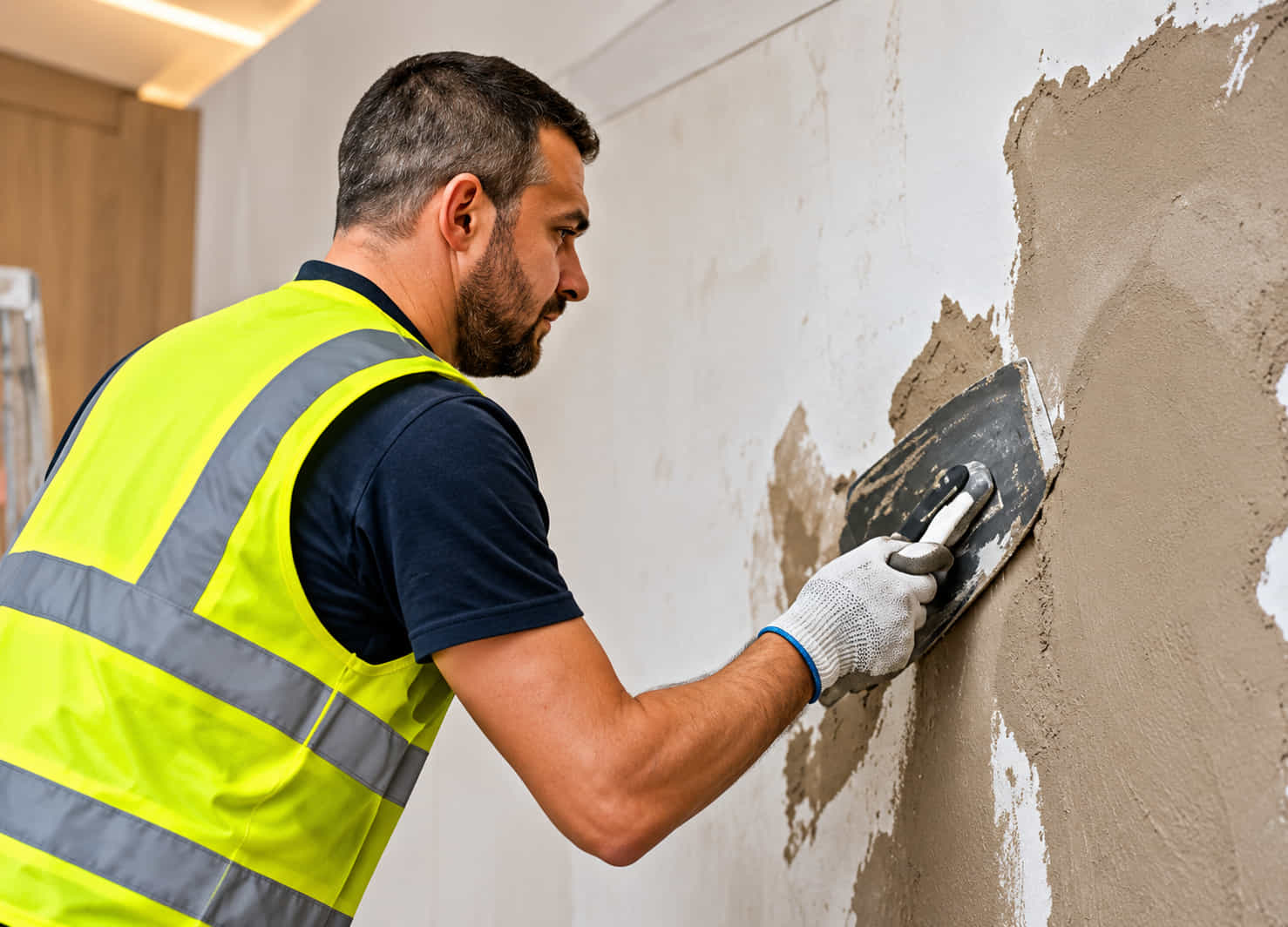
A thin finish coat of plaster over plasterboard or sound existing surfaces, leaving walls and ceilings smooth, flat and ready to decorate.
Quick answer
Skimming is the application of a thin finish coat of plaster, usually 2–3 mm, over plasterboard or an existing sound surface. It hides joints, blemishes and old textures and gives a smooth base for paint. Skimming is quicker and less disruptive than full re-plastering when the wall underneath is in good condition.
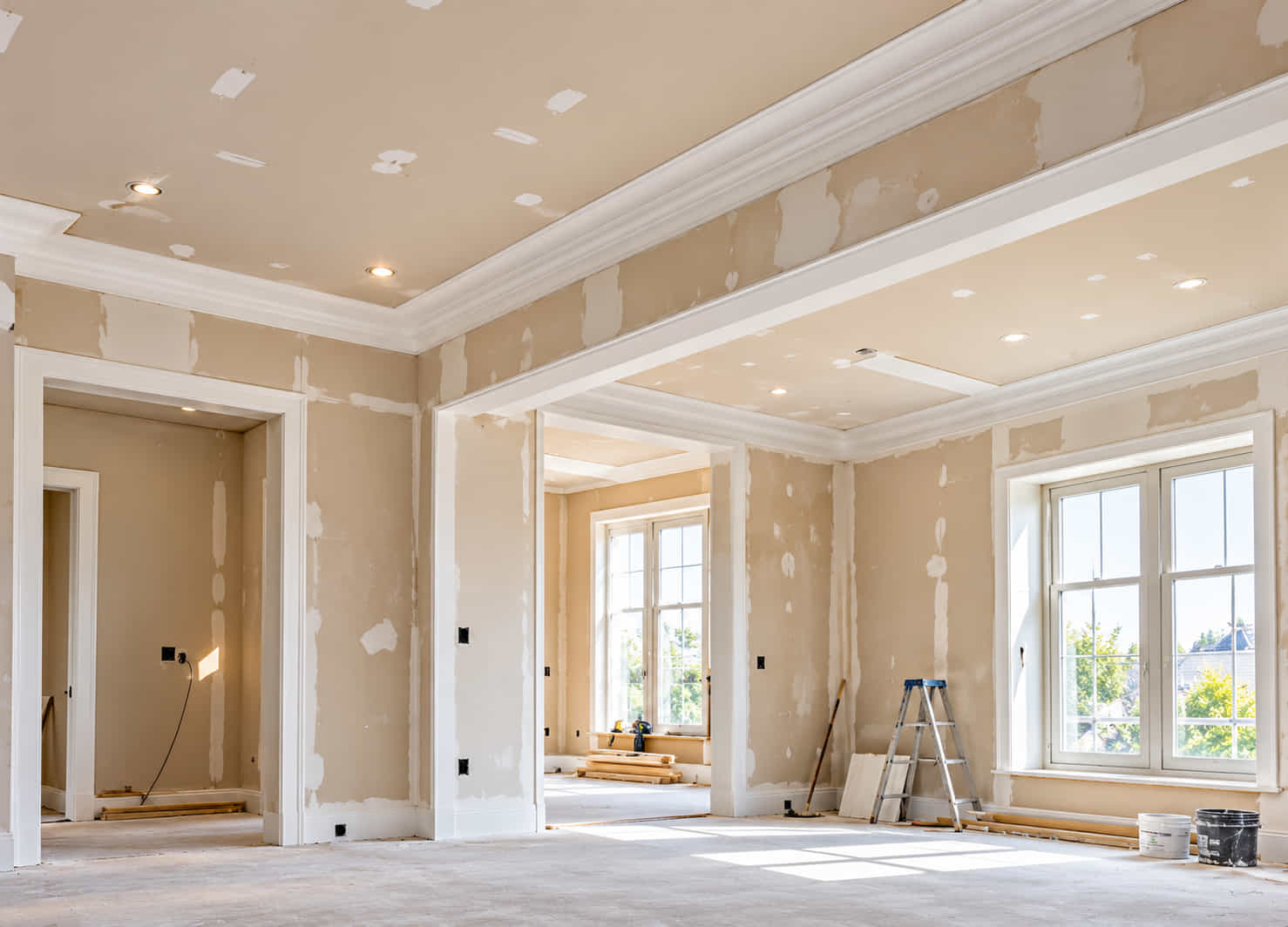
Skimming suits walls and ceilings that are structurally sound but look tired: patched, uneven, previously wallpapered or covered in an old textured coating. It is also the standard finish over new plasterboard in extensions, loft conversions and partition walls.
If the existing plaster is hollow, cracked through, contaminated with damp salts or badly out of line, a skim coat will not fix the underlying problem. In those cases we will recommend repairs or re-plastering and explain why.
Textured coatings applied before 2000 may contain a small amount of asbestos. Before we skim over or disturb an older textured ceiling, we recommend a sample test by an accredited laboratory. Where the coating is confirmed as asbestos-free, or can be safely encapsulated without sanding, we prepare it and apply a skim coat to give a flat, modern ceiling.
New skim should be left to dry fully before decorating and sealed with a mist coat of diluted water-based emulsion. We give written drying and decorating guidance at handover so your decorator can plan their start date.
Our process
We check that the surface is sound and suitable for skimming.
Rooms are sheeted and sockets, switches and fittings are masked.
Surfaces are primed for suction and corners are beaded where needed.
Two thin coats are applied and trowelled to a smooth finish.
We clean down and advise on drying and mist coating.
Areas
Skimming for residential and commercial clients throughout London, Essex, Hertfordshire, Cambridge, Cambridgeshire, Surrey and surrounding areas.
Skimming is a thin finish coat over a sound surface. Plastering is the wider term and can include backing coats that build out and straighten walls before the finish coat. Skimming is part of plastering, but not every wall can be fixed with a skim.
A typical bedroom can usually be skimmed in a day, with preparation sometimes adding half a day. Larger rooms, ceilings and hallways with stairwells take longer.
Once it has dried to an even pale pink, usually after three to five days in good conditions. Apply a mist coat of diluted water-based emulsion first so the paint bonds to the plaster.
Related services
Two-coat and backing-coat plastering for renovations, extensions and new builds.
Repairs to cracked, sagging and water-damaged plaster and board ceilings.
Patching, crack repairs and making good after building and electrical work.
Plasterboard linings, partitions, ceilings and metal stud systems.
Residential & commercial
Send photos, plans or drawings and we will come back with a clear, itemised quotation.